Things I have found helpful for smoothing the veterinary euthanasia consult.
Please remember that I am writing my opinion. These are not hard and fast rules by any means. Please take what you find useful and leave what you do not. After all, we don’t all enjoy the same type of soup.
One of our more emotionally charged consultations is that of euthanasia. We have to provide a humane clinical service. We also need to be kind, to the pets, the clients and to ourselves. It can take a lot out of you.
Euthanasia is not medically challenging but it can be very stressful. I have put some steps in place that seem to make the process as smooth as possible. This seems to reduce the stress overall and make the centre of the consult stay exactly where it should be. With the pet.
The Set up – ideally done before or at the very start of the consult
- If possible, discuss what will happen during the euthanasia with the client before the day. Describe in your own words that you will place a cannula and give a strong anaesthetic. Warn them that the patient may twitch and that this is normal. Give them the options of what to do with the body. It can be very hard for people to make decisions at the time.
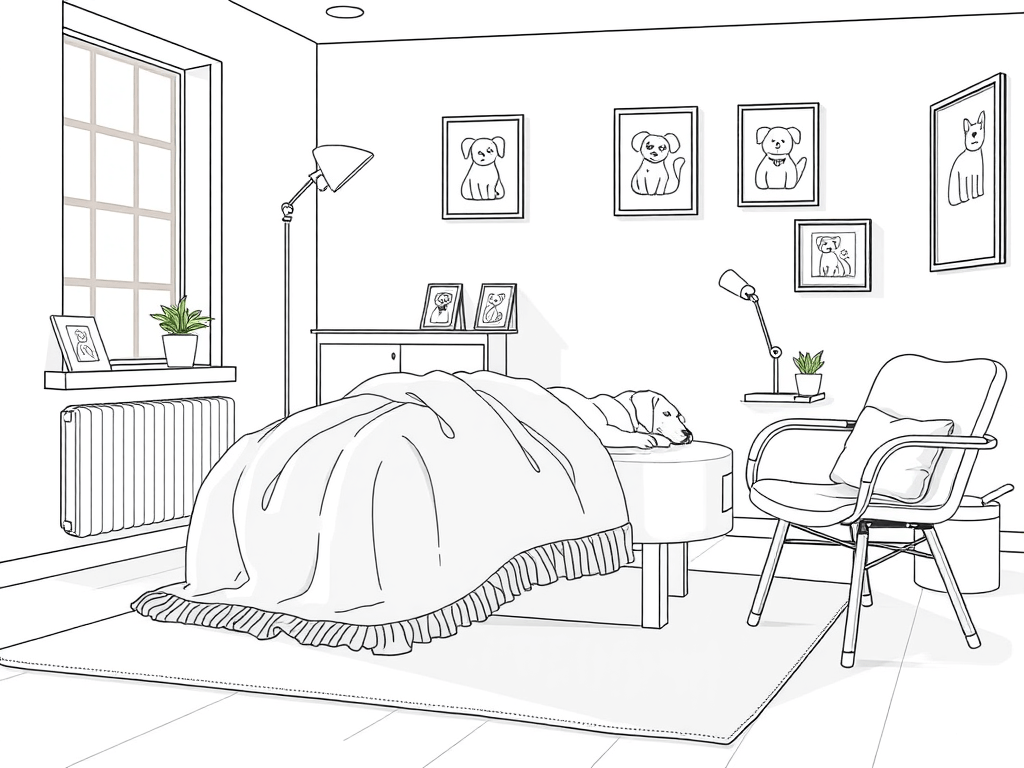
- Make the place more comforting. Chairs for the client and a big fluffy blanket for the patient. Having your loved one die on a cold hard floor is not a memory anyone wants.
- Prep your paperwork including clear estimates for the process.
- Prep your cannula and lethal injection – I like to set up a kidney dish with it all in for the room. Don’t forget your flush to check placement if your chosen medication will cause perivascular stinging.
- Check your nurse is aware that you will need them soon.
The aim is to have everything ready so the process is smooth and the client doesn’t feel that they are sitting around waiting for you. Some clients want the time to chat but others want to get it over with. Let them set the pace by making sure you are prepared.
If the client and patient arrive before you are ready and it is feasible to do so, get them into the room for privacy and let them know you might still be a few minutes. No one wants to grieve in public.
Discussion
At this point I like to get all the admin out of the way. Initially checking that the euthanasia is wanted and indicated. Sometimes patients have rallied and at this point it turns into a normal consultation. It’s never a bad thing to be slightly over prepared and have to return the medication to the bottle. Usually the clients are sure in their painstakingly made decision and we proceed.
- Talk through the process so the clients know what is about to happen. Tell them that they can be present for as much or as little of the process that they want. Some people do not want to be present. Do not judge, it is a traumatic thing to witness and the love they have given that patient throughout the rest of their life is enough. Be neutral on their decision but give an extra hug if it is just you and the patient for the end.
- Get the paperwork signed and clearly confirm which options are wanted for the body. Make sure it is clearly marked and the owners are sure. Complaints and mistakes from incorrect cremation options are hard to come back from.
- At this stage I will take payment. I usually give the option of now or later but I prefer before the euthanasia so that the owners can focus on the patient and their goodbyes with nothing else left to do. They can also leave when they want to afterwards. Take payment in the consulting room where possible. Give as much privacy as possible.
- Try to limit your questions to the owner, get the key decisions but then try to just let them be.
The event
- I like to place the cannula in front of the clients as long as they are not needle-phobic. This is because:
- Often the animals are old and sore and moving them is difficult for them.
- Clients get very anxious when you take the patient from them at this time. Some worry you are restraining/ hurting the animal unnecessarily. I’ve heard some clients think you are going to give the injection out in prep and then panic. If the client sees the process they know exactly how it went and will not imagine something worse.
- If the patient is resisting the cannula placement and the client is watching they will be happier to comply when you ask to sedate the patient. Less stress overall for everyone.
- The clients can continue to cuddle/reassure the pet during placement which usually keeps the patient calmer.
- If you are worried about placing cannulas in front of owners first try to get used to taking bloods from patients in less emotionally fraught settings. Once you are over the stage fright you’ll be fine.
- Once the cannula is placed, clear the room of any unnecessary people.
- Allow the clients to cuddle/hold/stroke the patient the way they want to as long as you have access to the cannula.
- Give the injection fairly quickly, the slower you go the longer you will stay at each plane of anaesthesia and the more movement you will experience.
- Reassure the owners if there is any twitching. Check for a heart beat and be sure the patient has passed.
- Try to discreetly place a blanket or move the patient so that they don’t defaecate over the owner once they have passed.
- Leave the room to allow the clients some privacy. Some clients will keep it together in front of you but really need a moment afterwards to say goodbye fully.
- Do not stay and do your notes, find another computer.
- Allow the clients to leave quickly when they want to and via the least public means possible.
- Send a sympathy card if you’re that way inclined.
I hope you have found my euthanasia process useful. Please let me know any steps you follow when looking after your euthanasia cases.







 Vet Soup
Leave a comment