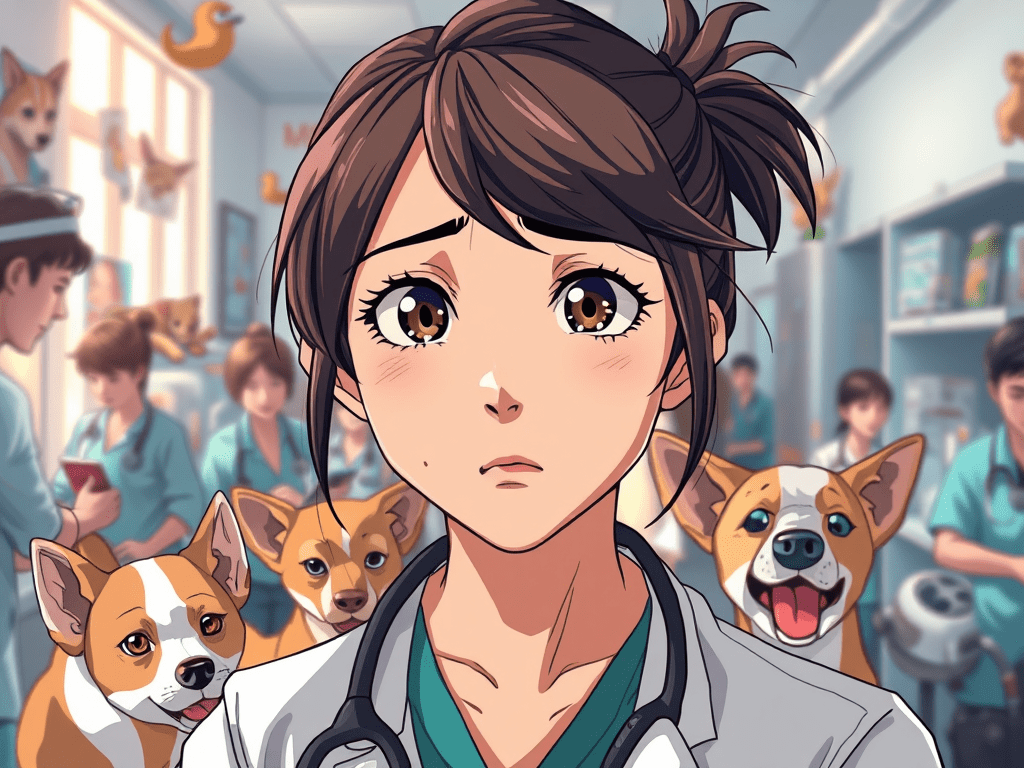
Keeping your head in a busy day.
Please remember that I am writing my opinion. These are not hard and fast rules by any means. Please take what you find useful and leave what you do not. After all, we don’t all enjoy the same type of soup.
Disclaimer: I am discussing moments of overwhelm when you are otherwise coping ok. If you generally feel overwhelmed you are going to need more help. This happens a lot in our profession and it needs fixing sooner rather than later. Most of us have been there, you can’t do it on your own. Pick up the phone and either call someone you trust or VetLife.
We’ve all had overwhelming days in veterinary practice. We’ve all had days where it’s been hectic, running from one case to the next, and we have neglected our own needs to the point where it is too much. We have had those days and, like it or not, we will have those days again.
These days are the days most likely to tip me over the edge from cool colleague to teary mess. As the cases start to pile on, the likelihood of the next case tipping me from being stretched to being overwhelmed increases. For me, I show my overwhelm with tears. Others may have other displays such as shouting, becoming snarky, irritable and even just fully shutting down and leaving for a time. We all have a point where the situation has boiled over and the emotions need to leak out and release the pressure.
Whilst overwhelm at work may not be ideal, the nature of our jobs predisposes to it. We are balancing a lot of pressures including:
- managing a patient’s situation and stress
- managing a client’s raised emotional state
- making judgements on balancing care with finances
- performing complicated procedures or investigations
We are also pushed by our practices and a desire to earn a living to manage multiple of these situations at the same time. Do not feel bad if the job overwhelms you at points. It is natural and normal. You are a human and that is allowed. Saying that, you need to be aware of the frequency. If it happens too often you should not ignore that sign. It’s not healthy. Chronic stress will lead to health problems as your body tries new ways to communicate with you and make you rest.
Thankfully, I have found that the frequency of these days reduces with experience. As a New Grad I hit the point of overwhelm monthly. Now, it probably happens once a year (although more when I was extra hormonal and pregnant).
Recognising Overwhelm
It is key that you track your emotional state during the day. If you are going to implement strategies to reduce overwhelm you need to know when it is about to hit. Listen to the signs your body tells you. Did you just snap at a colleague? Are your shoulders tense?
I know that I am on the path to overwhelm when my chest tightens. I can now feel an almost characteristic tension often along with a feeling of helplessness. Feeling like I don’t know the next step or I cannot help my patients are absolute triggers for me. When the chest tension comes along I know I need to act.
If you need help learning to track how you are in the day I suggest a brief moment between consults or ops. Mentally scan your body looking for tension. How is your breathing? Is it shallow or fast? Checking in often will give you information. It can seem wasteful when you are busy but it’s more important to do when you feel that you don’t have the time. Failing to recognise your emotional state will only allow negative emotions to grow and then show, impacting your clients and colleagues.
Preventing Overwhelm
Of course, prevention is better than resolving overwhelm. Almost this entire website is in some part dedicated to reducing overwhelm and improving the emotional experience of being a clinical vet. I will write some general points below and I’m sure I will expand on them in time.
- Look after yourself during the day.
- ‘Ok mum, I get it.’ No, seriously, manage your body to do your job. You must drink water or your preferred liquid during the day. If your day is busy already, don’t make life harder and get a headache from dehydration. Don’t make it your personality though, just quench your thirst when you check in and realise you’re thirsty. Most people’s kidneys do not need constant flushing. Also, it is not a badge of honor to have not had time to go to the toilet. It takes two minutes and will stop you rushing and being stressy. Almost nothing is so urgent it can’t wait two minutes and the things that are usually are resolved in ten.
- Manage your diary as much as is feasible.
- Usually the practice has policies in place to help this. Remember you are a professional and if you feel you do not have sufficient time then discuss it. A vet seeing a couple fewer consults a day is much preferable to someone in crisis.
- If you know 5 ops a day is a push for you, budget some extra time to reduce the pressure when an emergency comes in. I plan for an hour admin on my ops day which can become emergency time if needed.
- Each day ought to have slots for emergencies and rechecks separate from routine slots. It shouldn’t need to be said, but I’ve said it.
- Fill the knowledge gaps that give you stress.
- I spent a lot of my first year absolutely terrified when manning the overnight OOH. I couldn’t understand why it was so bad whilst the rest of the role became easier. My constant state of overwhelm in the first couple of years stopped me from realising the cause until I spoke to a more senior vet. She pointed out that if I was so worried overnight I should do some emergency CPD. She was absolutely right, I was so stressed because deep down I knew I didn’t know enough about stabilising emergencies to the point where I could find more information on what to do next.
- Try and look at the cases that are most likely to cause you to feel overwhelmed and target your CPD that way.
- Find a supportive and adaptable work team.
- This is a biggy and beyond the scope of this post. I’m sure we will tackle it more another time. Basically try to find a team that will help take the pressure off you on the busy days and support you when overwhelm strikes.
- Ensure you get rest in your home life.
- Be kind to yourself and do not expect to be super mum after busy days. The TV is your friend.
- Try to have a strong interest outside of work
- This is to force yourself to switch off in your down times. If you had a stressful day and then do not distract yourself you will not fully calm down. You then enter the next day in a primed state.
- I have always enjoyed music and exercise but I found having a child to be the most effective. I simply cannot worry about a case at work when my baby is screaming in my face. Do not have a child for this reason, it’s a whole other level of work but I found this to be a beneficial bonus.
- Consider therapy.
- In my opinion, most people would benefit from therapy generally. Talking through triggers and understanding what is likely to set you off can help you mitigate it.
When Overwhelm Strikes
You’re in the practice and you are needed in many places at once. Two cases are urgent and there just aren’t enough people to get them started on their fluids. At this moment a nurse rushes an acutely dyspneic cat through to prep, pushing aside you and the patient you are currently working on to get the patient into the oxygen chamber. It’s just too much, and you feel the emotions building.
- Breathe. I find two breaths in and then one long breath out most effective. You inflate your lungs and then just inflate a little more before letting out a controlled long breath. You can do this anywhere and immediately in the moment. It may be enough to head off overwhelm.
- Remember the feeling will pass, even if you did nothing. Remember it is a feeling and not a fact. Some people find distracting themselves helpful e.g. naming objects or singing a song. I focus on my breathing, in and out.
- If this isn’t enough or you can’t think straight, take two minutes. Try to signal you will be back soon. Go sit down somewhere quiet and breathe deeply. Check your watch and breathe solidly for two minutes and then if you have to, get back out there. Even if you only get 30 seconds before you are urgently needed, you will have done some good.
- Reach out. Call in help. Can someone take over for a few minutes? What can you delegate? You do not need to do it all alone. Even if you are sole charge you can ask for help from nurses to start things for you as you take a moment. Don’t be shy to ask the receptionist for help holding a patient in an emergency. Of course only ask them to do what they can safely do, but it is often more than you think. Another help is to ask reception to move non-essential consultations. Mentally knowing that you have time to handle your cases can make a huge difference.
- Once the feeling is passing try to make a plan in your head or with others. Do the urgent things first, small step by small step. You don’t need to tackle the mountain, you only need to take the next step. Non-urgent things can wait, clients can wait (although get someone to tell them what’s going on).
- Deal with what is in front of you. Do not get sucked into worrying about a case that hasn’t walked through the door yet even if it sounds like a nightmare. Focus on the next step. When it arrives, then you can focus on it.
Usually the feeling passes fairly quickly and depending on how you are and the situation you are in you either continue as if nothing has happened or get some time to yourself to recover a bit before continuing as if nothing has happened. It is definitely worth spending a little time later, perhaps at home or somewhere/with someone that you feel safe, reflecting on what happened and possible causes. Could doing something now make it less likely to happen again? E.g. discussing the situation with your boss, reducing your consult load, CPD etc.
Sometimes the answer is just that it was a bad day and nothing will change. You can’t plan for freak events in the diary. I have found overall that with experience those bad days get less and less frequent.
If you are struggling with overwhelm I hope this article has helped you explore some areas to try and improve things for you.
Don’t forget to be kind to others experiencing overwhelm beside you. You may not see or understand what has caused it but that is because you are not them. If you have fuel in the tank, help out.
Do you have helpful strategies for those struggling with these hard moments? Please share below.





 Vet Soup
Leave a comment