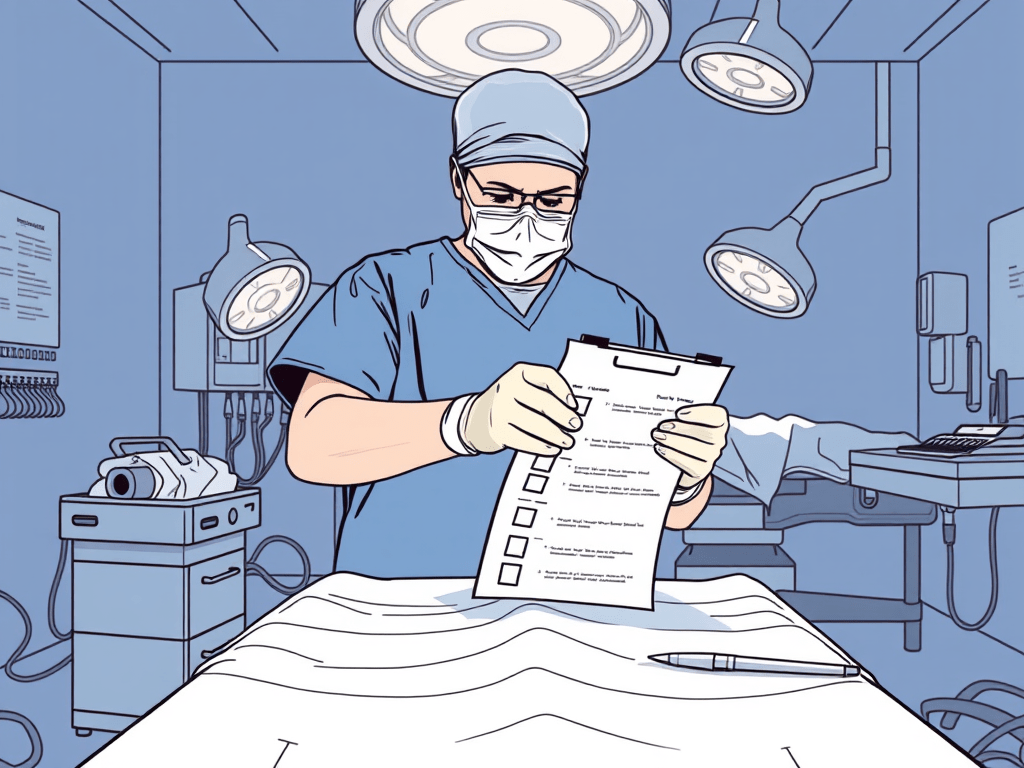
I would like to persuade you that having checklists in your working life is a great thing. It seems counterintuitive and restrictive but I believe it is very helpful. It is completely at odds with a lot of advice and praise for autonomy. Autonomy is lorded as a key factor in job satisfaction. It is great to feel that you are carving your own work and path in clinical decision making.
I believe that the vet job is often dripping in autonomy and actually having the psychological safety of checklists for repeatable and routine things will only benefit those that have them.
Placing a cannula in an aseptic manner does not need personal flare.
We often routinely do complicated tasks that involve multiple steps. A classic example is most of our surgeries. When we do them routinely enough they become second nature. But even then there is always a risk of forgetting something because it is a Tuesday. For these situations we then become paranoid. This is a subtle effect but will heighten our stress for the day. Checklists can help reduce that stress.
Checklists will also allow you to quickly check that the key things you want to happen in a day are happening. An example of a routinely accepted checklist is the procedures and medications section of most hospital sheets. One glance and you can see your patient’s status.
Formalising the things that experienced staff take for granted also allows for safer training of trainees. If they are following checklists they are less likely to miss key steps that they are still learning the importance of. An example in my own life is that trainees seem to often forget taking temperatures when recovering patients from anaesthetics. Having a checklist aids the trainer as well in ensuring the trainee is following the steps.
For very critical activities in practice many have checklists already. Most have a surgical checklist to discuss prior to starting any surgery. These have been shown to reduce mistakes in busy medical hospitals and it is likely this will be reflected in veterinary as well. I think extending the checklists into simple things such as medicine requests would prove beneficial.
Autonomy can be in the way we deal with our patients and clinical decisions. It can come alongside checklists designed to catch the silly mistakes in the more routine areas of work.
I would recommend having your own checklists for things. Even for the more routine appointments, ensuring you haven’t missed a step in diagnostic work up!
Years ago, I read ‘The Checklist Manifesto’. It really opened my eyes and confirmed my partially formed thoughts on the benefits of having a checklist. I would highly recommend it, it is an easy read for what seems like such a boring matter and gives a far more compelling argument!





 Vet Soup
Leave a comment